
How to protect the soil after an especially rainy winter


 12 MAR
How to protect the soil after an especially rainy winter
This season is marked by an especially rainy winter. The continued rainfall has been good news for water recharge, but it has also created a complex agronomic scenario: saturated soils, less root oxygenation and greater proliferation of pathogens.
When water accumulates, the soil’s biological balance changes. And in that change, crops can be left exposed.
What happens in the soil when it rains too much?
A prolonged period of rain like the one we are experiencing can have many consequences:
- Root asphyxia due to lack of oxygen.
- Greater mobility and proliferation of soil fungi such as Fusarium, Phytophthora or Rhizoctonia.
- Imbalances in the beneficial microbiota.
- Greater crop susceptibility to vascular diseases.
It is not just about “more moisture”, but about an imbalance of the root ecosystem.
In this context, the strategy cannot be limited to acting when the problem is already visible. The key is to get ahead and strengthen the system from the soil up.
1. When pathogen pressure rises: selective biodisinfection
In high-humidity scenarios, soil fungi find the perfect environment to activate and spread in our crops. Preventive management involves reducing that pressure without destroying the useful microbial life that brings so many benefits to our soils.
This is where a selective biodisinfection strategy makes sense, one that allows you to:
- Reduce the pathogen load.
- Favour beneficial microorganisms.
- Recover the biological balance after stress episodes.
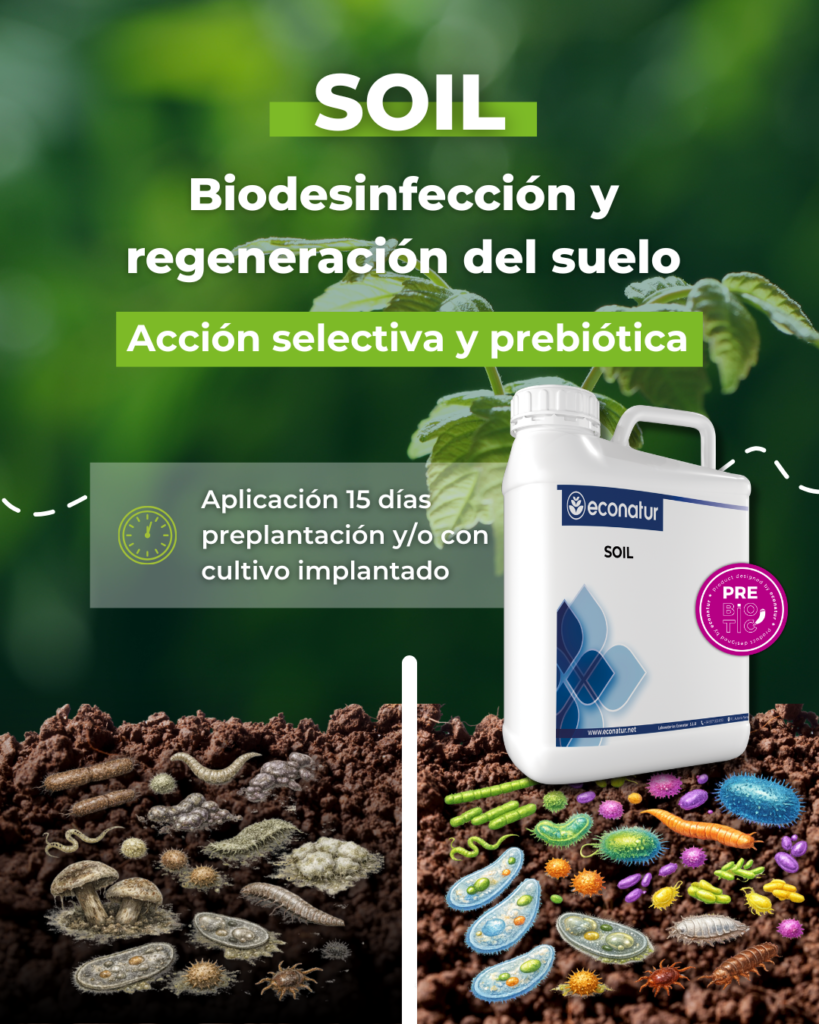
Soil falls within this line of work, an ECONATUR solution aimed at preparing the soil and restoring its natural balance, acting as a prebiotic and bioprotectant. It is a perfect measure as a starting point to prepare the ground before sowing or after periods of production stress.
2. When the microbiota is out of balance: rebuilding the root ecosystem
Heavy rain does not only activate pathogens; it also alters microbial populations. In many cases, beneficial microorganisms decline, leaving room for opportunistic species.
At times like these it is essential to promote an active microbial strategy that:
- Stimulates the beneficial microbiota.
- Improves biological competitiveness against pathogens.
- Favours biofertilisation and root development.
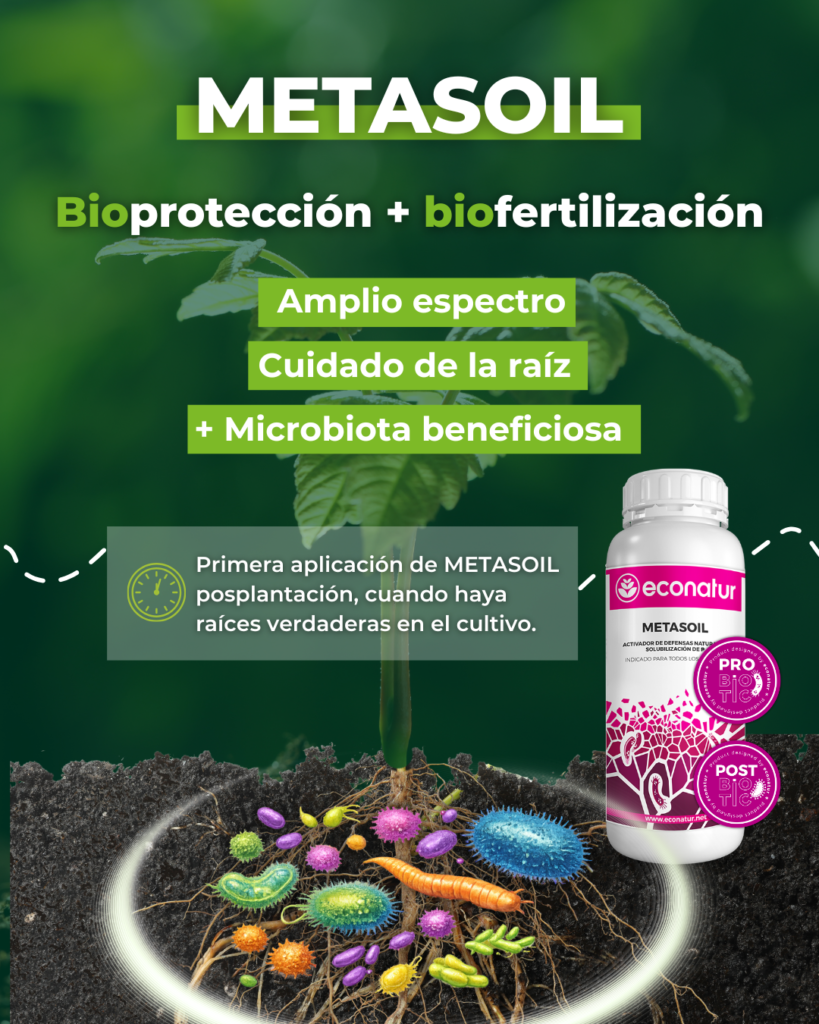
In this context, solutions such as Metasoil make it possible to work the soil from a metabiotic perspective, combining bioprotection and nutrition in a single approach.
The aim of this solution is a healthy root surrounded by a natural barrier of beneficial microorganisms, acting as a biological shield against external agents.
3. When the risk is vascular: activating internal defences
In especially rainy winters, many diseases do not only affect the root but progress towards the plant’s vascular system.
Here the approach changes: besides working the soil, we must strengthen the crop’s own defensive capacity.
Activating mechanisms such as:
- Systemic acquired resistance.
- Callose formation.
- Lignification and papillae development.
makes it possible to strengthen the internal barriers and protect the vascular bundles.
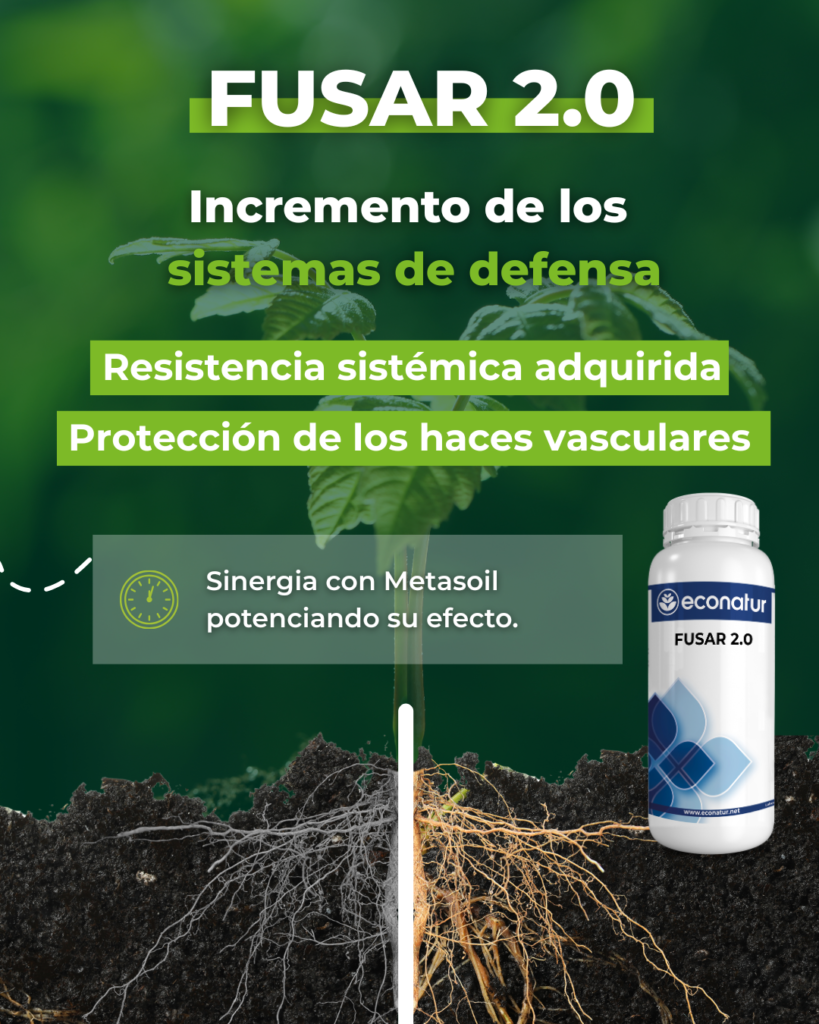
Fusar 2.0 fits into this line, designed to act as a true vascular shield, reinforcing the crop’s defensive response against persistent soil pathogens.
From reaction to strategy
Increased water stress does not have to mean losses, but it does require a change of strategy.
Rather than treating diseases, it is about:
- Balancing the soil.
- Strengthening the rhizosphere.
- Activating natural defences.
- Building resilience.
Bioprotection is no longer an alternative: it is a strategic tool for facing climatically demanding seasons.
Because when water changes everything, the answer starts beneath our feet.

9 Mar, 2026
Econatur presents new strategies ag…
12 Jun, 2026
eSR®: advanced technology for acti…