Organic Farming
Organic farming promotes healthier, more sustainable cultivation that respects the environment. At Econatur, we help farms improve fertility, productivity and natural balance without relying on harsh chemicals. Our biotechnology solutions strengthen plants from within and improve their ability to adapt. As a plant biotechnology company, we offer effective, safe technology that addresses real farming challenges, helping growers produce more and better while protecting soil health and the quality of the final product.

Innovation in Organic Farming
Innovation in organic farming helps create more productive, balanced cropping systems without depending on chemical inputs. At Econatur, we apply advanced biotechnology to improve plant vitality, strengthen natural defence mechanisms and optimise nutrient availability in the soil, always taking a sustainable approach that respects agricultural ecosystems.
This innovation enables growers to tackle challenges such as pests, environmental stress and declining soil fertility with efficient, safe solutions. Our formulations are designed to improve yields, crop quality and the stability of production systems, delivering visible, consistent results season after season.
CONTACT US NOW
Organic Farming: Boost Production Through High-Performance Innovation
In a world where environmental protection and production efficiency increasingly go hand in hand, organic farming offers a strategic solution. If you run an agricultural business or professional farm, you want more than environmentally friendly practices: you need sustainable, profitable results that meet market requirements. As a plant biotechnology company, Econatur specialises in supporting this transition by combining innovation, a systematic approach and results.
What Is Organic Farming?
Organic farming involves growing crops without synthetic fertilisers or pesticides, respecting natural cycles, supporting soil biodiversity and using techniques that regenerate resources rather than deplete them. This approach emphasises:
- Using natural inputs or inputs approved for organic production.
- Prioritising crop rotation and soil conservation.
- Reducing environmental impact and preserving water and biological resources.
However, organic farming should be understood as more than simply using fewer chemicals. It is a production system capable of achieving high yields when supported by appropriate technology, expertise and innovation.
What Do We Mean by High-Performance Organic Farming?
High-performance organic farming refers to organic farms that maximise productivity without compromising organic principles. This involves:
- Optimising soil fertility and plant nutrition through biological inputs, improvements to soil microbial activity and advanced management practices.
- Using precision technology, crop monitoring and innovation to anticipate pests, diseases and abiotic stress.
- Aligning organic production with export requirements, product quality and markets that value sustainability and traceability.
The aim is to farm organically with efficiency, profitability and technical rigour. This is the goal of high-performance organic farming.
Innovation in Organic Farming: A New Standard
Innovation plays a key role in helping organic farming achieve competitive yields. According to recent studies:
- Microbial biofertilisers can increase crop yields by up to 30% while reducing chemical fertiliser use by 50%.
- Biotechnology applied to sustainable agriculture enables the development of crops that are more resistant to pests, diseases and adverse weather conditions, increasing productivity.
- Soil health becomes a strategic asset: increasing organic matter and microbial activity improves plant nutrition, water retention and resilience to water stress.
Innovation in Organic Farming
| Innovation | Description | Key Benefit |
|---|---|---|
| Microbial biofertilisers | Introducing beneficial microorganisms into the soil or plants to improve nutrient uptake. | Higher yields and reduced chemical inputs. |
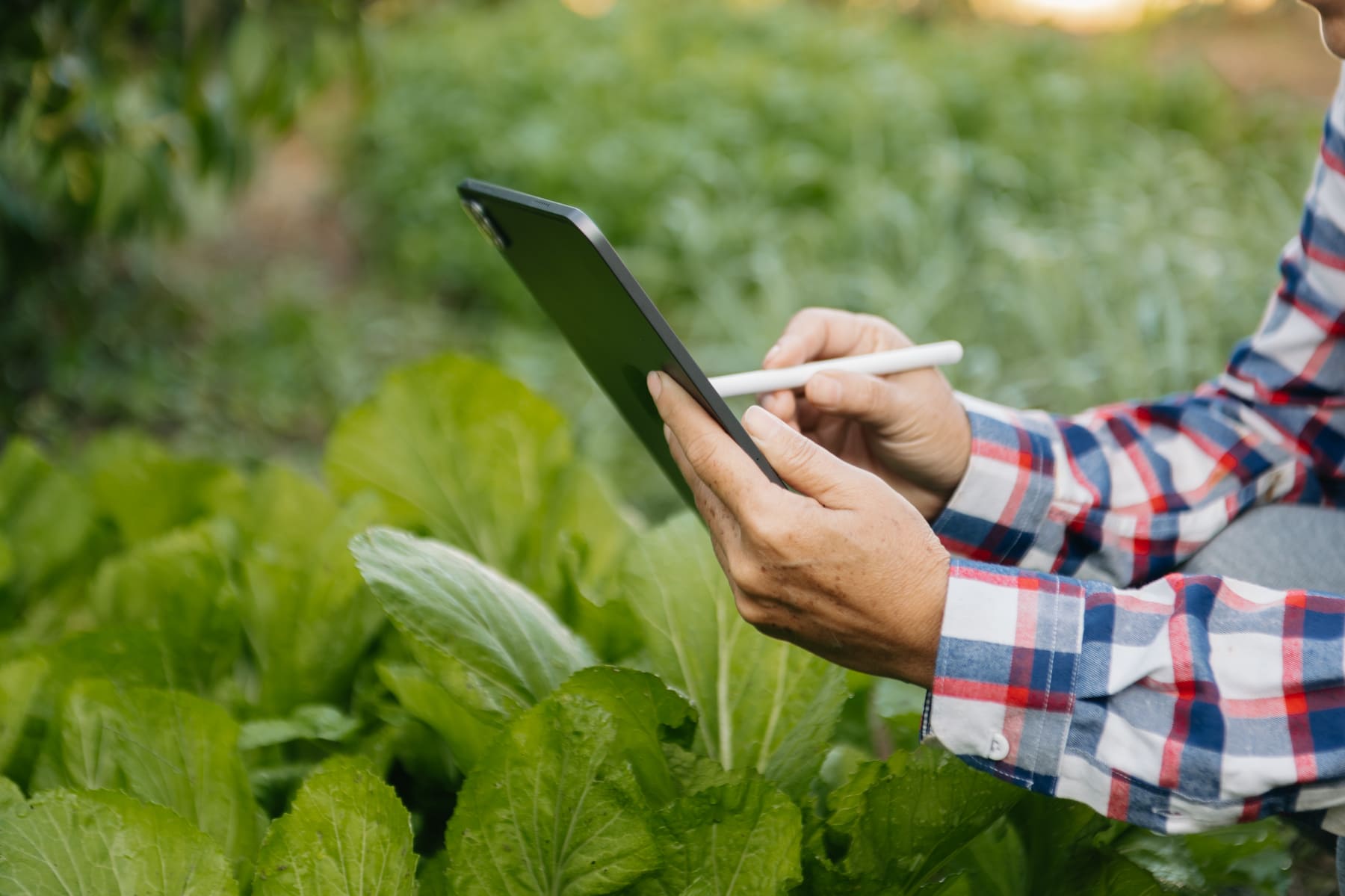
| Precision agriculture: sensors, satellites and IoT | Real-time monitoring of moisture, nutrients and plant vigour; variable-rate input application. | Optimised resources and improved production efficiency. |
| Resilient and improved varieties | Traditional or assisted breeding to adapt crops to abiotic stress and pests. | Greater production stability under adverse conditions. |
| Advanced soil management | Crop rotation, cover crops, organic amendments and microbiological analysis. | Improved soil fertility and nutrient cycling. |
| Biological control and integrated pest management | Replacing or supplementing chemical treatments with natural enemies, traps and monitoring. | Effective, safe organic production, fewer losses and better quality. |
Benefits of Adopting High-Performance Organic Farming
Moving to a high-performance organic farming model offers many benefits for your farm or agricultural business:
- Improved product quality: organic crops often command higher market value and enjoy a stronger reputation.
- Greater medium- to long-term profitability: although the transition may require investment, improvements in soil, biodiversity and efficiency reduce reliance on chemical resources and can lower operating costs.
- Market differentiation: offering high-yield organic products helps you stand out from competitors and access premium markets.
- Resilience to climate change: healthy soils, advanced technology and adapted crops help mitigate the risks of drought, pests and other adverse factors.
- Effective sustainability: maintaining ecosystem health, reducing chemical inputs and preserving resources helps meet organic standards without sacrificing production.
Implementing High-Performance Organic Farming
Use this practical checklist to guide your transition or improvements. Tick each step as you complete it:
- ✅ Carry out a comprehensive soil analysis covering pH, nutrients, organic matter and microbiology.
- ✅ Establish a crop rotation or cover crop plan to improve the soil.
- ✅ Select biofertilisers and biological inputs suited to your crops and soil.
- ✅ Monitor moisture, nutrients and plant vigour using sensors or satellite technology.
- ✅ Introduce varieties adapted to local conditions and resistant to abiotic stress.
- ✅ Set up an efficient irrigation system, such as smart irrigation that prevents water losses.
- ✅ Implement a biological pest and disease control programme using natural enemies, traps and crop rotation.
- ✅ Establish traceability, organic certification and value-added marketing processes for organic products.
- ✅ Assess costs and income, and set realistic, incremental yield targets.
- ✅ Review results regularly and adjust inputs and practices based on actual data.
Why Trust Econatur as Your Organic Farming Partner?
As a plant biotechnology company, Econatur offers technical expertise, applied innovation and solutions tailored to each farm. We focus on:
- Developing biological inputs specifically for high-performance organic farming.
- Supporting the design of your transition or improvement plan towards efficient organic production.
- Providing technical advice and technology for monitoring, soil management and crop management.
- Ensuring organic production is profitable, sustainable and offers added market value.
If you want to transform your farm, business or agricultural project through high-performance organic farming, Econatur is a specialist partner committed to providing the technical support and results you seek.
Organic farming is more than a trend: it is a strategic necessity for the long term. Equating it with lower yields would be a mistake. Choosing high-performance organic farming means investing in a production model that respects nature, reduces risk, improves quality and increases profitability.
The key lies in innovation, living soil, biological inputs and the intelligent use of technology. To take this step and establish your business as a leader in organic production with professional results, choose a partner that understands both the principles and their practical application: Econatur.
Frequently Asked Questions About Organic Farming
If you are considering adopting organic practices or want a clearer understanding of organic farming, here are straightforward answers to common questions.
What Is the Difference Between Organic and Conventional Farming?
Organic farming uses natural inputs, sustainable techniques and practices that respect ecosystem cycles. Conventional farming, by comparison, uses synthetic fertilisers and pesticides that can affect biodiversity and soil health. The organic approach seeks healthier, more environmentally responsible production.
Can Organic Farming Achieve Good Yields?
Yes, especially with a high-performance organic farming approach. Technology, suitable biological inputs and regenerative practices can deliver efficient, profitable and sustainable production without sacrificing quality or volume.
What Certification Does a Farm Need to Be Recognised as Organic?
To be officially recognised as organic, a farm must comply with the organic production regulations of its country or region, such as the European Organic Production Regulation. This includes avoiding synthetic chemicals, ensuring full traceability and undergoing regular audits by authorised certification bodies.