Organic Fertilisers
Organic Fertilisers
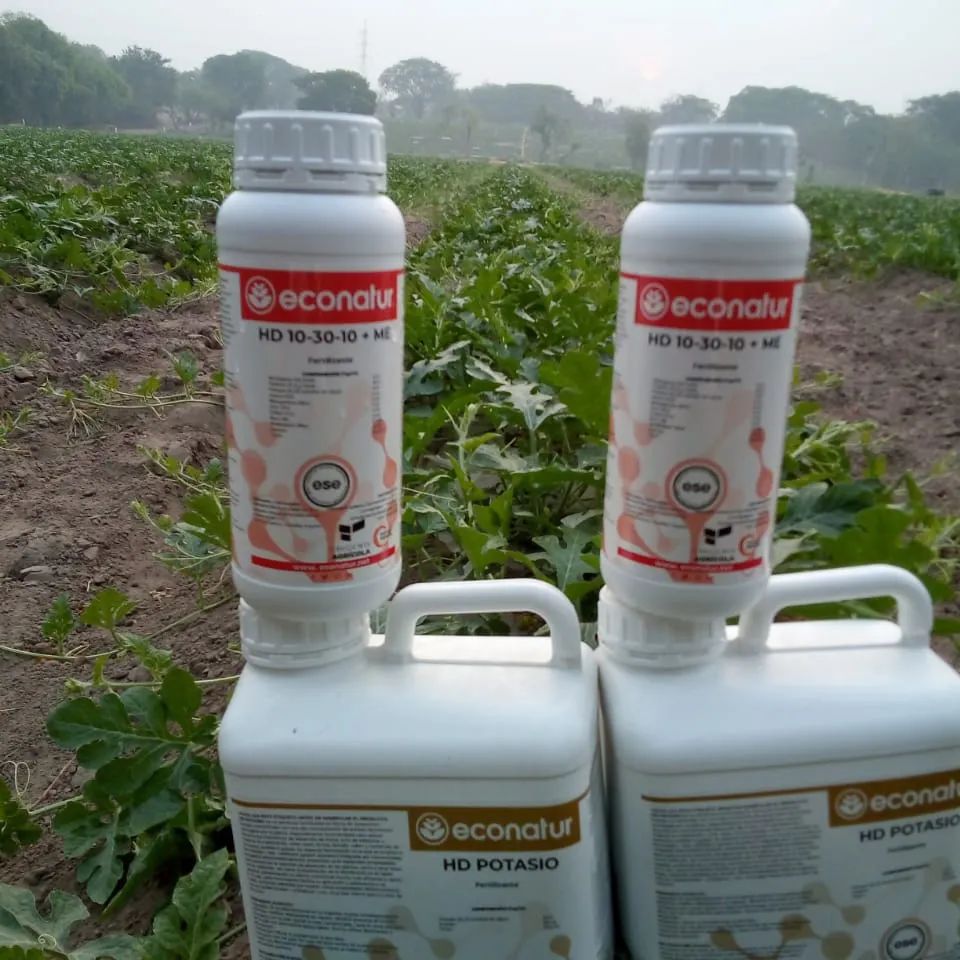
Econatur organic fertilisers: the key to healthier, more sustainable agriculture. Our products are formulated with natural ingredients that nourish the soil and strengthen plants without harming the ecosystem. Suitable for organic and conventional crops, they improve soil structure, stimulate microbial life and increase nutrient availability. With Econatur, your crops grow stronger, more resilient and higher in quality, meeting demanding organic production standards.
At Econatur, we support responsible agriculture by developing effective, environmentally friendly organic fertilisers. Our range includes liquid and solid solutions adapted to each crop stage, ensuring balanced, consistent nutrition. Through innovation and our commitment to growers, we offer natural alternatives that maximise yields and protect biodiversity. Choose Econatur and move towards a more profitable, natural farming model committed to the planet’s future.
CONTACT US NOW
Organic Fertilisers: Your Natural Solution for Sustainable Agriculture
At Econatur, we offer a comprehensive fertilisation service using organic fertilisers designed to improve soil health, optimise agricultural production and reduce environmental impact. Our approach combines technical expertise and personalised strategies for committed farmers and businesses.
Why Choose Organic Fertilisers?
Organic fertilisers are inputs derived from natural materials, including manure, compost, worm castings and green manures. They release nutrients gradually and sustainably restore soil properties. These products encourage microbial activity and water retention while preventing the accumulation of salts and toxins.
Advantages and Disadvantages of Organic Fertilisers
| Aspect | Organic Fertilisers |
|---|---|
| Soil improvement | Restore structure, increase fertility and encourage biodiversity. |
| Water retention | Increase the soil’s capacity to retain and absorb water. |
| Nutrient uptake | Provide a steady nutrient supply without stressing plants or overfertilising. |
| Environmental compatibility | Reduce water pollution and gas emissions without accumulating salts or toxins. |
| Slow release | Slower action; unsuitable for correcting immediate nutrient deficiencies. |
| Nutritional precision | Variable nutrient concentrations make precise application rates difficult. |
| Dependence on microorganisms | Performance depends on soil microbial activity. |
| Volume and cost | Bulkier and more expensive to store and transport than chemical fertilisers. |
| Risk | May contain pathogens or organic contaminants if inadequately treated. |
The Impact of Organic Fertilisers
Organic fertilisers play a key role in regenerative agriculture and soil conservation. These strategies promote carbon sequestration, biodiversity and sustainable long-term soil productivity.
A study in Catalonia shows that regenerative farms incorporating organic fertilisation maintain or even exceed conventional production while reducing costs, particularly for water, energy and synthetic fertilisers. In EU nitrate-vulnerable zones, nutrient management plans already combine organic and mineral fertilisers to balance production and environmental objectives.
Recommended Techniques for Using Organic Fertilisers
- Compost and worm castings: provide stabilised organic matter, encourage microorganisms and improve soil structure.
- Manure and slurry: rich in nitrogen, phosphorus and potassium; they should be properly composted before use.
- Bokashi and liquid fertilisers: concentrated aerobic or anaerobic preparations applied to foliage or the root zone.
- Green manures and cover crops: legumes sown and incorporated into the soil supply nitrogen and organic biomass.
- Mechanical incorporation in bands or furrows: applying fertilisers to specific crop areas using band placement along furrows before or during sowing.
- Crop rotation: alternating legumes and grasses to balance nutrients without excessive external fertiliser inputs.
- Direct drilling and minimum tillage: reducing erosion and supporting organic matter by leaving plant residues on the surface.
Practical Tips for Effective Use
- Analyse the soil before starting: measure pH, organic matter and nutrient content.
- Plan fertilisation: choose an organic fertiliser suited to the crop, soil and growth schedule.
- Apply at the best time: before sowing or during early growth to allow mineralisation ahead of nutrient demand.
- Combine with mineral fertilisers where necessary: a mixed strategy can correct specific deficiencies or accelerate growth.
- Monitor crop development: observe vigour, flowering and fruit quality, adjusting rates in subsequent cycles.
- Maintain soil cover: use crop residues or cover crops to reduce erosion and improve structure.
- Avoid excessive fertiliser application: organic products can also cause pollution when overapplied. Respect rotations and rest periods.
- Train your team: ensure those handling and applying fertilisers understand good practices and safety.
The Impact of Your Choice: Profitable, Sustainable and Responsible
Organic fertilisation improves long-term productivity while reducing water, energy and carbon footprints. Recent studies in Spain report equivalent or better production at lower costs once soil health has been restored.
Your business also strengthens its position as a sustainability leader, aligned with European requirements for balanced, responsible fertilisation plans.
How Do We Work at Econatur?
- Technical soil assessments and personalised recommendations.
- Organic fertilisation plans tailored to your crops.
- Ongoing advice during implementation and monitoring of results.
- Integration with complementary practices: rotation, soil cover and direct drilling.
- Staff training and professional technical support.
If you want a natural, effective and sustainable solution for your crops, our organic fertilisers are an ideal choice. Econatur provides everything from initial analysis to practical implementation, with technical expertise and a commitment to the environment.
Contact us today and take the first step towards responsible, high-performance fertilisation. Improve soil fertility, protect the ecosystem and strengthen your agricultural results with us.
Frequently Asked Questions About Organic Fertilisers
Informed decisions are essential when improving your crops. Here are answers to common questions about organic fertilisers, their benefits and their application.
What Is the Difference Between Organic and Chemical Fertilisers?
The main difference is their origin and mode of action. Organic fertilisers come from natural materials such as manure, compost and plant residues. They release nutrients gradually and improve soil structure. Chemical fertilisers are synthetic and release nutrients immediately, but can degrade the soil over the long term.
Can I Use Organic Fertilisers on Any Crop?
Yes. Organic fertilisers are suitable for most agricultural, vegetable and fruit crops. However, soil analysis and adjustments to the fertiliser type and application rate are important to meet the crop’s specific needs and achieve the best results.
How Long Does It Take to See the Effects of Organic Fertilisers?
Unlike chemical fertilisers, organic fertilisers offer a slow, sustained release of nutrients. Their effect is therefore more gradual but longer lasting. Initial benefits can generally be seen two to four weeks after application, depending on the fertiliser and soil conditions.